
Why ordinary fuses and circuit breakers were not enough

Fuses and miniature circuit breakers protect cables against overloads and short circuits. They normally operate when the current becomes high enough to damage the wiring. The problem is that a dangerous current can pass through a person to earth without being large enough to operate an ordinary fuse or circuit breaker quickly.
Residual current devices were introduced to add another form of protection. Instead of waiting for a large overload, an RCD looks for electricity escaping from its intended path. If it detects sufficient leakage, it rapidly disconnects the supply.
How does an RCD work?
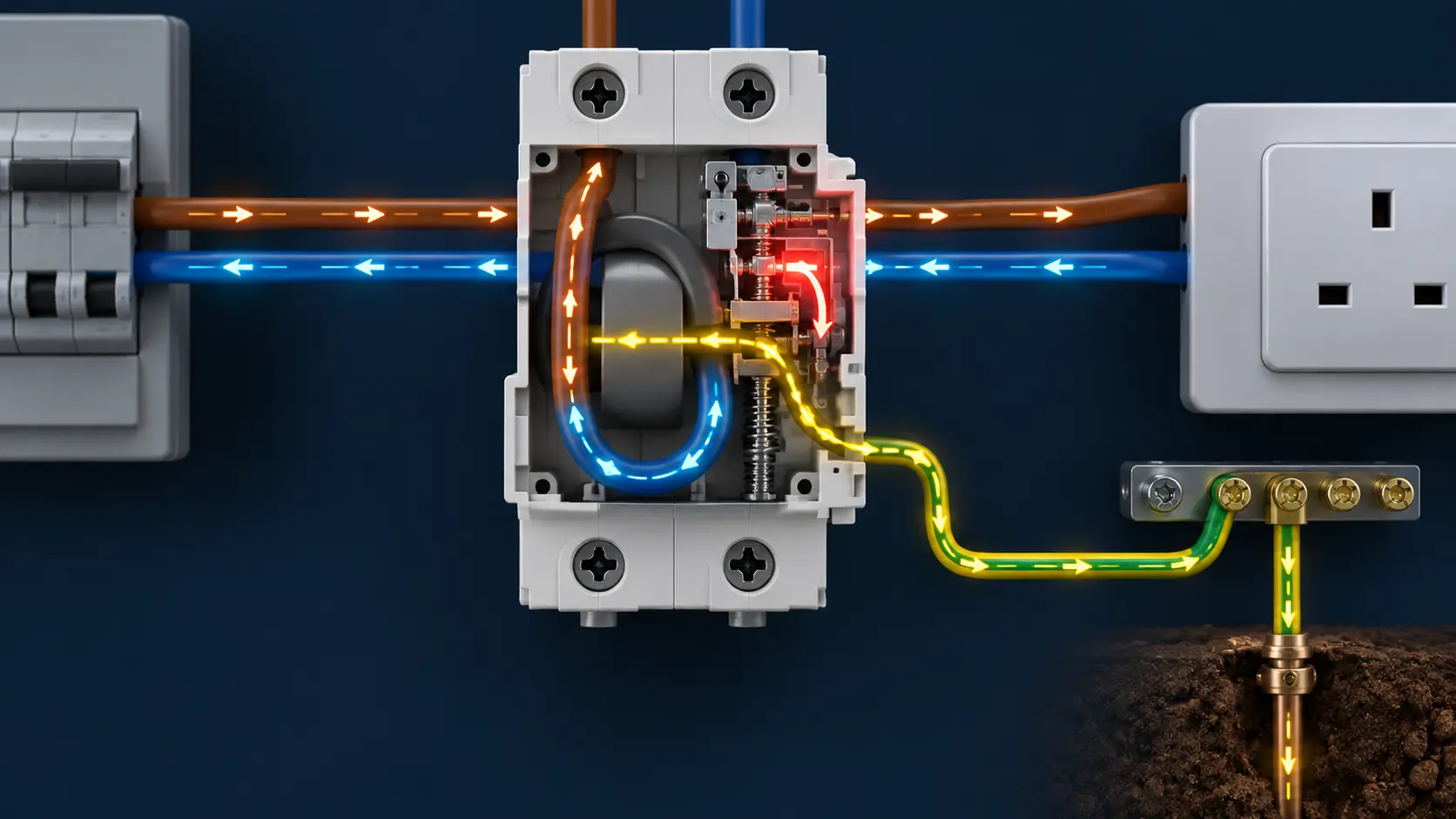
In a healthy circuit, the current flowing out through the live conductor should be almost the same as the current returning through the neutral conductor. The RCD continually compares those two values.
If a damaged appliance, cable or installation allows some current to flow to earth — possibly through a person — less current returns through neutral. That difference is called residual current. When it reaches the device's trip threshold, the RCD switches the circuit off quickly.
A 30 mA RCD is commonly used to provide additional protection against electric shock. It reduces risk, but it is not a guarantee against injury and it does not make unsafe electrical work acceptable.
A real fatal accident that shows why RCDs matter
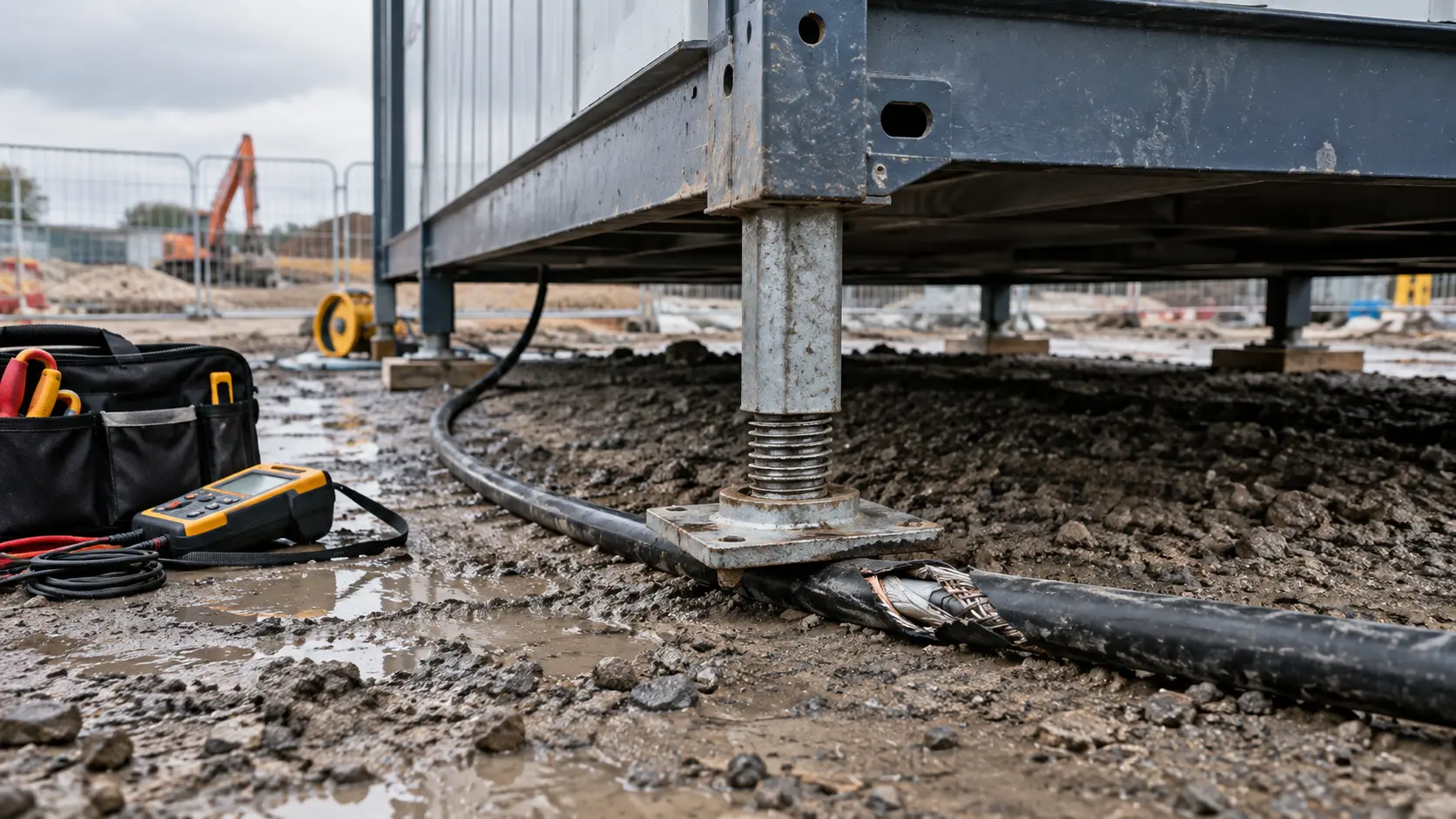
The Health and Safety Executive describes a temporary site office where an armoured supply cable was crushed by one of the cabin's jack-legs. The RCD began tripping intermittently. Instead of finding and repairing the fault, someone bypassed the RCD.
When the cable moved again, the metal frame of the cabin became live. A worker touching the metal door frame received a fatal electric shock.
A working RCD that had not been bypassed would likely have detected the leakage to earth and disconnected the supply. That is an inference from the HSE account, not a claim that any protective device can prevent every injury. The clear lesson is never to bypass an RCD: repeated tripping is a warning that a competent person should investigate.
What an RCD cannot do

An RCD detects some faults, not every possible danger. For example, a shock directly between live and neutral may not create an imbalance for it to detect. RCD protection therefore works alongside, and never replaces:
- correct earthing and bonding;
- fuses or circuit breakers for overload and short-circuit protection;
- sound wiring and suitable electrical equipment;
- proper inspection, testing and maintenance.
Where is RCD protection used in homes?

Modern installations commonly use RCD or RCBO protection for socket outlets and many domestic circuits, including circuits serving equipment outdoors and in higher-risk locations. The exact requirements depend on the installation, circuit and current edition of BS 7671, so an electrician must assess the property rather than rely on a general checklist.
What should a homeowner do?

- Use the test button at the interval stated by the manufacturer and follow the instructions on the consumer unit.
- If an RCD will not reset or repeatedly trips, unplug appliances where safe and arrange an investigation.
- Never hold, wedge or wire an RCD in the on position.
- If an older consumer unit appears to have no RCD protection, ask a qualified electrician to assess it.
An Electrical Installation Condition Report can identify the protective devices fitted, test their operation and record defects or recommended improvements.
Technical sources: HSE, Electrical safety on construction sites; HSE, Work using electrically powered equipment; and IET, RCDs: Selection, types and testing.